
Definition and Scope of Forensic Psychology
Forensic Psychology is the application of theories and principles in clinical psychology to solve problems in the legal arena. Broadly, criminal justice, civil disputes, and policy-making are aspects of this arena. The term “forensic” comes from the Latin word “forensis,” which refers to public courts of ancient Rome. Forensic psychologists work within the judicial and legal systems. They provide professional psychological expertise to address problems in areas such as eyewitness testimony, jury behavior, and risk assessment.
Even though it is a relatively new field that has existed for only about 50 years, the application of psychological principles in correctional, delinquency, and other forensic settings by clinical psychologists has a long history that dates back to the 19th century. The formal field of forensic psychology was established later. The American Psychological Association, which is considered the main regulatory body of psychology, recognized this branch as its own field in 2001 and recertified it in 2008.
Historical Development of Forensic Psychology
Timeline
Early Foundations and Pioneers
In the 20th century, psychologists attempted to apply psychological principles to solve legal problems. Hugo Münsterberg is a pioneer of this development. In his influential book On the Witness Stand (1908), Münsterberg sought to demonstrate how psychology could inform legal processes, including eyewitness testimony, confessions, and jury decisions. However, his ideas were initially met with scepticism by the legal community, which questioned the relevance of psychological science to legal reasoning (Bartol & Bartol, 2021).
Institutional Growth and Formal Recognition
Following World War I, interest in the intersection between law and psychology began to grow, marking the emergence of legal psychology. Around the same time, correctional psychology also began to gain recognition. A key milestone was the establishment of the Juvenile Psychopathic Institute in Chicago in 1909 by Grace M. Fernald and William Healy. Although initially intended to diagnose “problem children,” the institute soon expanded to provide psychological assessment and treatment for youths referred by juvenile courts, laying the foundation for modern forensic assessment and intervention (Healy & Bronner, 1936). These early efforts collectively marked the formal beginnings of forensic psychology as an applied science within the justice system.
What Do Forensic Psychologists Do?
Forensic psychologists work at the interface of psychology and law, performing roles that differ depending on the context – clinical, investigative, correctional, or academic. Their primary functions include assessment, treatment, consultation, research, and expert testimony (DeMatteo et al., 2020).
Core Roles in Legal and Clinical Contexts
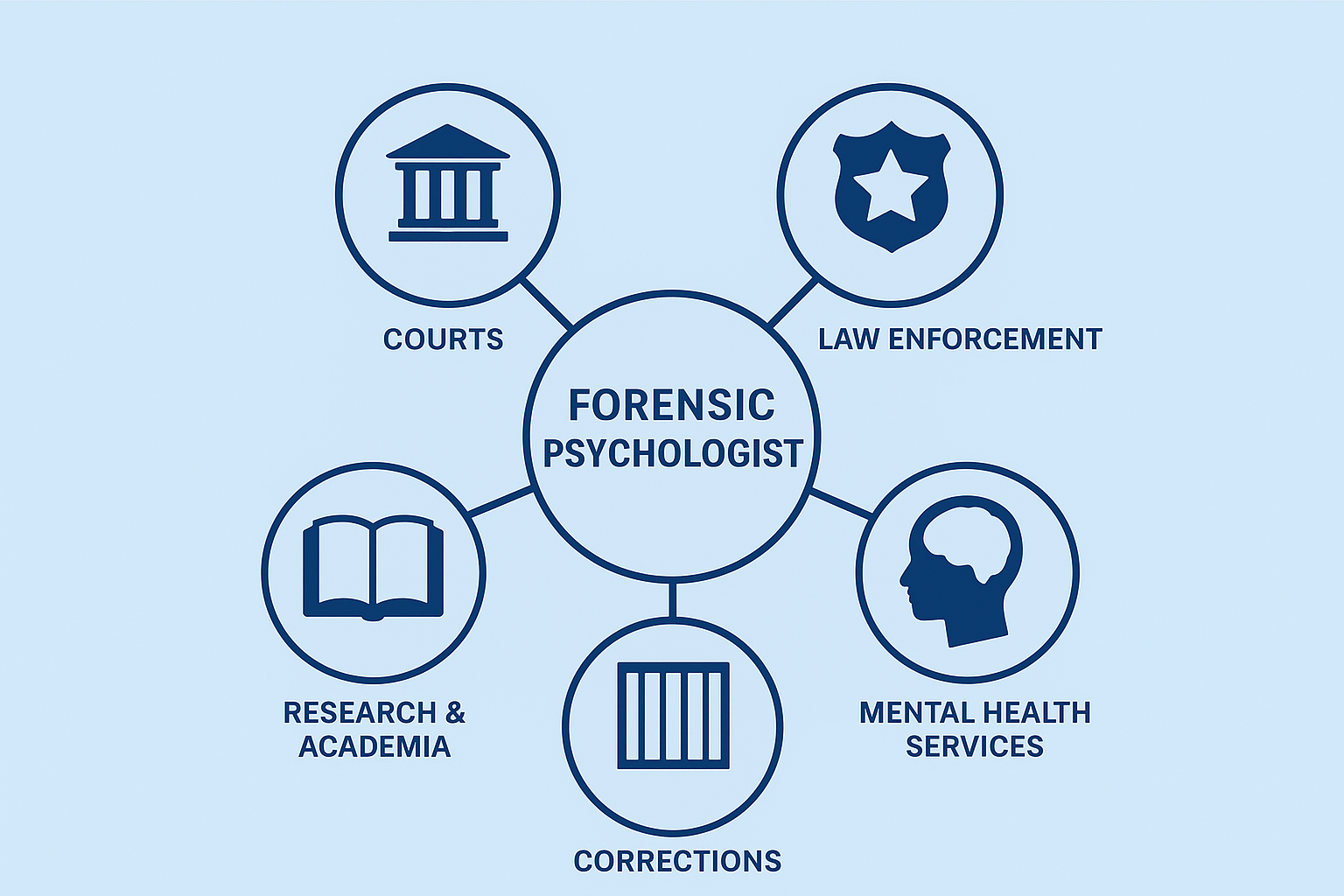
In practice, forensic psychologists may be involved in a wide range of professional activities across legal, clinical, and correctional settings. These responsibilities commonly include:
- Evaluating threats within school settings
- Conducting child custody assessments
- Assessing the competency of defendants in criminal cases
- Providing counselling support for crime victims
- Implementing procedures for delivering death notifications
- Screening and selecting applicants for law enforcement roles
- Assessing individuals for post-traumatic stress disorder
- Delivering and evaluating treatment and intervention programs for both juvenile and adult offenders (Ward, 2013).
These examples represent some of the most frequently encountered duties in forensic psychology, though the specific responsibilities of a forensic psychologist may vary depending on their training, work setting, and the legal context in which they operate.
Difference Between Forensic Psychology and Criminal Psychology
Both forensic psychology and criminal psychology operate within law enforcement and the criminal justice system. However, these two fields differ quite significantly. Forensic Psychology is broader: it applies psychological theories and methods to legal and judicial settings. Specifically, their work involves both criminal and civil cases.
Table 1: Difference Between Forensic Psychology and Criminal Psychology
| Aspect | Forensic Psychology | Criminal Psychology |
|---|---|---|
| Primary Focus | Application of psychological principles to legal and judicial contexts | Understanding criminal behavior, motivations, and patterns |
| Scope of Work | Broad; includes both criminal and civil cases | Narrower; focused specifically on crime and offenders |
| Legal Involvement | Direct involvement with courts and legal proceedings | Primarily supports law enforcement investigations |
| Types of Cases | Criminal cases, civil disputes, custody matters, witness evaluations | Criminal cases only |
| Core Activities | Mental health evaluations, risk assessments, expert testimony, trauma assessment | Profiling offenders, aiding investigations, and crime prevention |
| Populations Worked With | Defendants, victims, witnesses, families, legal professionals | Offenders and suspected perpetrators |
| Courtroom Role | Frequently provides expert testimony | Rarely involved in court testimony |
| Perspective | Evaluative and clinical within a legal framework | Analytical and behavioral with a crime-focused lens |
| Relationship to Law Enforcement | Consultative and legal | Operational and investigative |
Careers in Forensic Psychology
Educational Pathways and Professional Registration
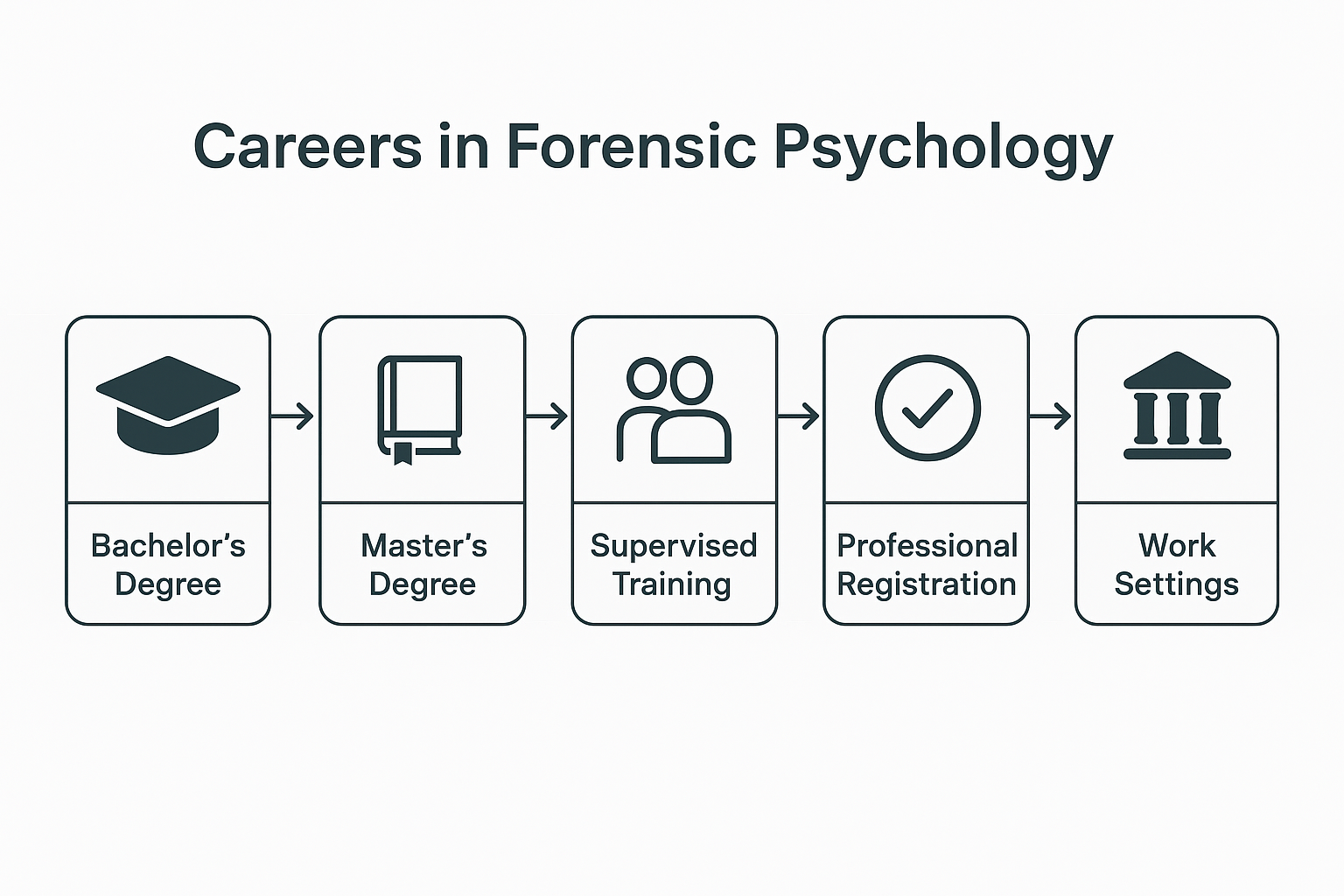
Becoming a forensic psychologist requires a master’s degree at a minimum. Usually, a forensic psychologist holds a PhD or a Doctor of Psychology (PsyD). In many states, to work as a forensic psychologist, registration with a professional board is a must. For instance, in the UK, registration with the British Psychological Society (BPS) is required to practice as a forensic psychologist. To achieve professional board certification, the individual must meet the specific requirements set by the board.
Though requirements vary across boards, the usual path is to obtain a bachelor’s degree in psychology or a related field and then enrol in a Master’s program in Forensic Psychology. After completing the Master’s, the person should complete a supervised training, usually two years long. Then they can apply for registration with their corresponding professional board.
Work Settings and Professional Roles
Work settings of forensic psychologists are diverse. They are employed in correctional facilities such as prisons and juvenile detention centres; courts; law-enforcement agencies; private practice; academic or research institutions; or governmental bodies involved in policy, parole, or rehabilitation programs. The work setting varies based on education qualifications, work experience, and the psychologist’s preferences. Their roles include expert witness, evaluator (e.g., competence, mental state, risk, recidivism), treatment provider, consultant to legal or law-enforcement agencies, researcher, or policy advisor.
Demand and Future Outlook
Demand for forensic psychologists is gradually increasing, as the justice system continues to recognise the importance of mental-health considerations, risk assessments, victim support, and evidence-based rehabilitation. especially given increased awareness of trauma, PTSD, and offender rehabilitation.
Modern Trends in Forensic Psychology

Forensic Neuropsychology
Recently, forensic psychology has been shifting to integrate neuropsychology into practice. This integration is known as forensic neuropsychology. Researchers are studying cognitive and neurological factors behind risk-related behaviors such as aggression. The reason for this integration is to develop more biologically informed models of forensic assessment (Horn et al., 2024).
Technology in Assessment and Intervention
Forensic psychologists have recently been using more advanced technologies, including virtual reality (VR) and wearable devices, in assessment and intervention practices. Virtual Reality programs such as deep-breathing modules, aggression-prevention simulations, and role-play–based social skills interventions are increasingly used. Wearable devices, including fitness trackers and biofeedback-based smartphone applications, have become increasingly popular (Horn et al., 2024).
Closing Thoughts
Forensic psychology is a relatively new branch of psychology with a short formal history, yet it plays a significant role in modern justice systems. Forensic psychologists contribute to a wide range of legal and clinical processes, including psychological assessment, treatment, consultation, and expert testimony. Their work supports not only the criminal justice system but also civil, family, and social matters that arise within legal contexts.
Public interest in forensic psychology has increased substantially, largely due to its portrayal in popular media. However, these portrayals often present an exaggerated or unrealistic image of the field. In reality, forensic psychology requires a strong scientific foundation, advanced education, and specialized professional training. Becoming a forensic psychologist involves a substantial commitment to ethical practice, evidence-based methods, and continued professional development.
In recent years, the field has continued to evolve through the integration of neuropsychology and advanced technologies into forensic assessment and intervention. These developments reflect a broader shift toward more precise, research-informed, and humane approaches within the justice system. As legal systems increasingly recognize the importance of mental health, trauma, and rehabilitation, forensic psychology is likely to remain an essential component of fair, informed, and effective legal decision-making.
Related Posts
